

Blog
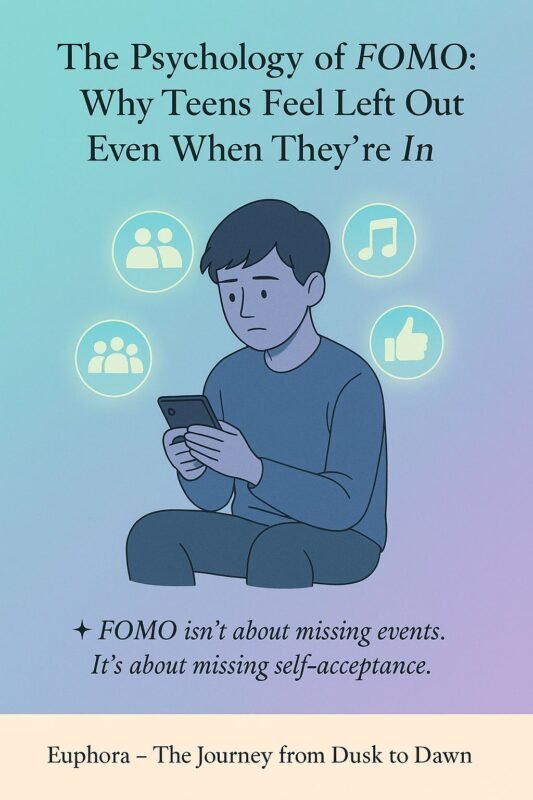
A teenager scrolls Instagram after hanging out with friends. The photos are of the same gathering they attended—but somehow, they still feel left out. This is the paradox of FOMO (Fear of Missing Out).
The Science Behind FOMO
Psychologists explain FOMO as an anxiety of exclusion—a fear that others are having rewarding experiences without you.
- Social media amplifies this by showing highlight reels instead of reality.
- The teenage brain, wired for peer approval, perceives even small exclusions as rejection.
A study by Computers in Human Behavior found that high social media use directly correlates with increased loneliness and anxiety among teens.
Why Teens Feel Left Out Even When Included
- Comparison Trap: “They looked happier with her than with me.”
- Selective Posting: Teens see moments they missed, not the whole story.
- Brain Sensitivity: Adolescents are more reactive to perceived social rejection than adults.
Practical Steps for Teens & Parents
- Reality Check: Teach teens to question online perfection.
- Limit Screen Time: Encourage digital detox hours.
- Encourage Real Bonds: Offline interactions build stronger emotional security.
- Open Conversations: Normalize feelings of exclusion—“It’s okay to feel left out sometimes.”
Final Thought
FOMO is not about missing events—it’s about missing self-acceptance. When teens learn that they are enough, the fear of missing out loses its grip.