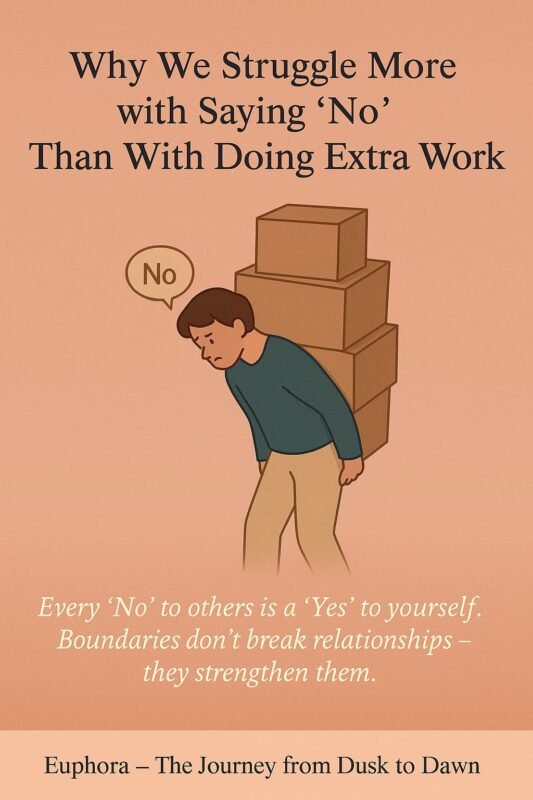
You’re exhausted, yet when someone asks, “Can you take this on?”—you say yes. Later, you regret it. Why is saying ‘no’ harder than carrying the burden?
The Psychology of People-Pleasing
- Fear of Rejection: Humans are wired to belong. Saying no feels like risking acceptance.
- Conditioning: Many of us grew up rewarded for compliance, not boundaries.
- Short-Term Relief, Long-Term Stress: Saying yes avoids conflict in the moment but leads to resentment later.
Research from the Journal of Consumer Research shows people who practice saying “I don’t” instead of “I can’t” are more likely to stick to boundaries.
The Real Cost of Saying Yes Too Often
- Burnout and resentment
- Declining work quality
- Strained relationships
- Loss of self-identity
Practical Ways to Say No
- Polite But Firm: “I’d love to help, but I don’t have the capacity right now.”
- Offer Alternatives: “I can’t do this, but maybe I can help next week.”
- Practice in Small Situations: Start by saying no in low-stakes requests.
Final Thought
Every “no” to others is a “yes” to yourself. Boundaries don’t break relationships—they strengthen them.