

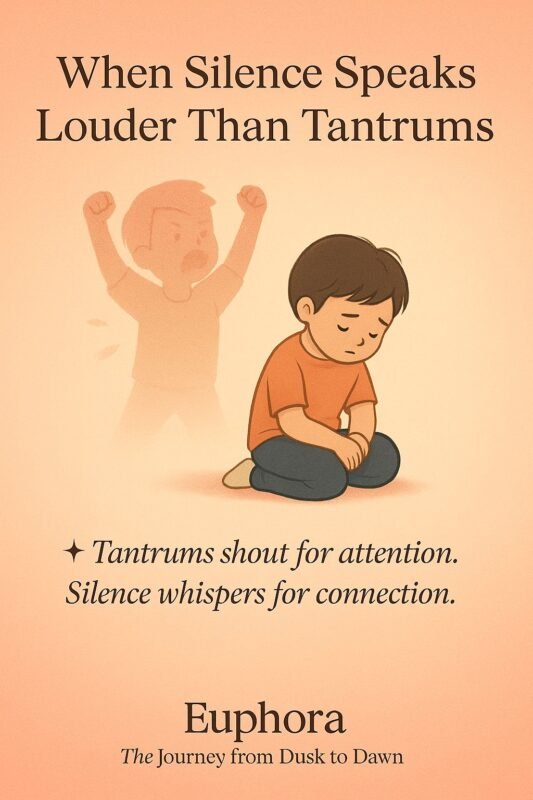
Most parents fear tantrums—the crying, the screaming, the defiance. But sometimes, a greater concern lies in what you don’t hear: the silence.
Children who withdraw emotionally may not throw fits, but their silence can be an unspoken cry for help.
Why Does Emotional Withdrawal Happen?
- Overwhelm: Some children shut down when they cannot process big feelings.
- Fear of Disapproval: If they believe expressing anger or sadness isn’t allowed, they retreat inward.
- Past Experiences: Repeated criticism or comparison can make them believe silence is “safer.”
Research in developmental psychology shows that withdrawn children are more prone to anxiety and depression later in life compared to those who openly express emotions.
Signs to Watch
- Avoids eye contact
- Prefers isolation even during playtime
- Stops sharing daily experiences
- Smiles or nods, but avoids deeper conversations
What Parents Can Do
- Create Safe Spaces: Let your child know all emotions are welcome, not just the “good” ones.
- Use Gentle Prompts: Instead of “What’s wrong?” try “I notice you’re quiet. Want to draw how you feel?”
- Model Expression: Share your own feelings calmly—“I felt stressed at work, so I took a walk.”
- Seek Professional Guidance: If silence persists, child counseling can help uncover hidden struggles.
Final Thought
A tantrum shouts for attention. Silence whispers for connection. Listen closely—your child’s quiet may be the loudest sound in the room.